
Sewer Wet Wells in the United States: History, Functionality, Deterioration, and Rehabilitation

Across the United States, aging water infrastructure is demanding long-overdue attention. For decades, buried assets—largely out of sight and out of mind—have been underfunded and deferred. While drinking water systems often dominate headlines, sewer collection systems are deteriorating just as rapidly.
At the center of these systems are sewer wet wells—critical structures responsible for collecting and temporarily storing wastewater before it is pumped to treatment facilities. As municipalities confront tightening budgets, increasing regulatory demands, and growing populations, understanding the history, function, deterioration, and rehabilitation of wet wells has never been more important.
A Brief History of Sewer Wet Wells in the United States

As American cities expanded throughout the 19th century, the need for organized water and wastewater systems became urgent. Early communities relied on hand-dug wells, nearby streams, and rudimentary drainage systems. However, as urban populations surged, so did public health concerns.
The foundations of modern sewer infrastructure trace back to ancient systems like those developed in the Roman Empire, where aqueducts and early sewer networks demonstrated the importance of engineered water management. Inspired by these early innovations, rapidly growing U.S. cities began investing in imported water supplies and sewage treatment facilities during the 1800s.
Wet wells became a vital component of lift stations within these expanding systems—designed to collect wastewater and enable it to be pumped to higher elevations when gravity flow alone was insufficient. Over time, thousands of these structures were built nationwide, many of which remain in service today.
The Current State of U.S. Wastewater Infrastructure

The broader condition of sewer wet wells reflects the overall state of American wastewater infrastructure. According to the American Society of Civil Engineers 2021 Infrastructure Report Card, more than 16,000 wastewater treatment plants nationwide operate at an average of 81% of their design capacity, with 15% at or beyond capacity.
These statistics underscore a larger challenge: aging infrastructure operating under increasing demand. Municipalities are tasked with balancing affordability, sustainability, maintenance, and long-term life-cycle costs—all while managing systems that, in many cases, have exceeded their intended design life.
The encouraging news? Agencies are increasingly adopting new technologies and forward-thinking asset management strategies to extend the life of buried infrastructure without the enormous expense and disruption associated with full replacement.
Why Wet Well Rehabilitation Matters
Aging and Decreased Performance
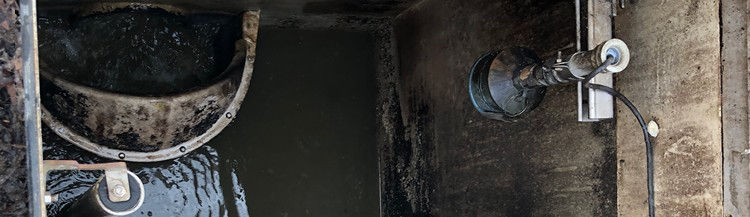
Most wet wells were constructed using steel and reinforced concrete—materials susceptible to corrosion, chemical attack, and structural degradation over time. Exposure to hydrogen sulfide (H₂S), moisture, temperature fluctuations, mineral deposits, and biofouling accelerates deterioration.
As corrosion advances, structural integrity becomes compromised. Without intervention, this can lead to:
Reduced pumping efficiency
Structural failure
Sewage overflows
Environmental contamination
Costly emergency repairs
Rehabilitation restores structural integrity, improves operational efficiency, and significantly reduces the risk of overflow and flooding.
Environmental and Economic Considerations
Rehabilitating existing wet wells often provides substantial environmental benefits compared to full replacement.
Reduced material consumption: Retrofitting minimizes the need for new concrete, steel, and excavation.
Lower embodied energy: Existing structures preserve the energy already invested during original construction.
Reduced carbon footprint: Construction-related emissions are minimized.
Urban efficiency: Rehabilitation avoids expanding infrastructure footprints in densely populated areas.
From a financial perspective, rehabilitation frequently proves more cost-effective than constructing new wet wells. While new facilities may offer energy efficiency improvements, it can take decades to offset the environmental and financial costs associated with new construction.
Surface Deterioration: The Core Issue
One of the most common forms of wet well degradation occurs at the surface level. Hydrogen sulfide gas oxidizes into sulfuric acid in the moist environment of a wet well, aggressively attacking concrete surfaces. Left untreated, this chemical corrosion compromises structural integrity.
To address this, municipalities have traditionally relied on protective coatings such as epoxies and geopolymers.
Epoxies in Wet Well Rehabilitation
Epoxies polymerize and harden at relatively low temperatures, creating protective barriers against corrosive environments. For many years, they have served as a cost-effective rehabilitation solution with improved resistance compared to unprotected concrete.
However, some agencies have experienced premature failures in highly aggressive environments with elevated H₂S levels. Coating degradation, bond failure, or reaching the end of product design life has prompted many municipalities to explore longer-lasting alternatives.
Fiber Reinforced Plastic (FRP) Panels: A Modern Alternative
Fiber Reinforced Plastic (FRP) panels have emerged as a robust solution for wet well surface rehabilitation, particularly in highly corrosive conditions. Companies like Northwest Geneva, in partnership with CPM Pipelines, have advanced FRP panel systems designed specifically for sewer environments.
Key Advantages of FRP Panels
1. Corrosion ResistanceFRP panels resist chemical attack from moisture, gases, and sewage byproducts far more effectively than traditional materials.
2. Chemical DurabilityThey withstand exposure to a wide range of chemicals commonly found in wastewater systems.
3. Lightweight Yet High StrengthDespite being lightweight, FRP panels provide substantial structural reinforcement and impact resistance.
4. Smooth, Non-Porous SurfaceThe non-absorbent surface reduces debris accumulation and inhibits bacterial growth, improving sanitation and reducing maintenance demands.
5. Ease of InstallationFRP panels can be customized and retrofitted onto existing structures with minimal disruption.
6. LongevityWith service lives extending up to 50 years, FRP systems offer compelling life-cycle cost advantages.
FRP Panels vs. Coatings: Long-Term Value
When comparing FRP panels to epoxy or other coating systems, several long-term advantages become clear:
Superior structural strength combined with corrosion protection
Reduced maintenance requirements
Enhanced hygiene due to non-porous surfaces
Lower long-term life-cycle costs
Minimal waste generation during installation
Although the initial investment may be higher than coatings, extended service life and reduced maintenance often result in significant cost savings over time.
Looking Ahead: Building a Resilient Future
The story of sewer wet wells in the United States mirrors the broader narrative of American infrastructure: rapid innovation, widespread expansion, deferred maintenance, and now, a critical turning point.
Rehabilitation offers a practical, sustainable path forward. By investing in proven technologies and durable materials—such as FRP panel systems—municipalities can extend asset life, improve reliability, and safeguard public health without the financial and environmental burden of full replacement.
As the nation stands at the threshold of water infrastructure transformation, proactive asset management and thoughtful material selection will define the next era of resilience.
The future of wastewater infrastructure depends not only on building new systems—but on intelligently preserving and strengthening the ones already in place.


Comments